In short
A checklist for deciding whether existing light fittings can be retrofitted to LED or should be replaced, with lessons from a council office upgrade.
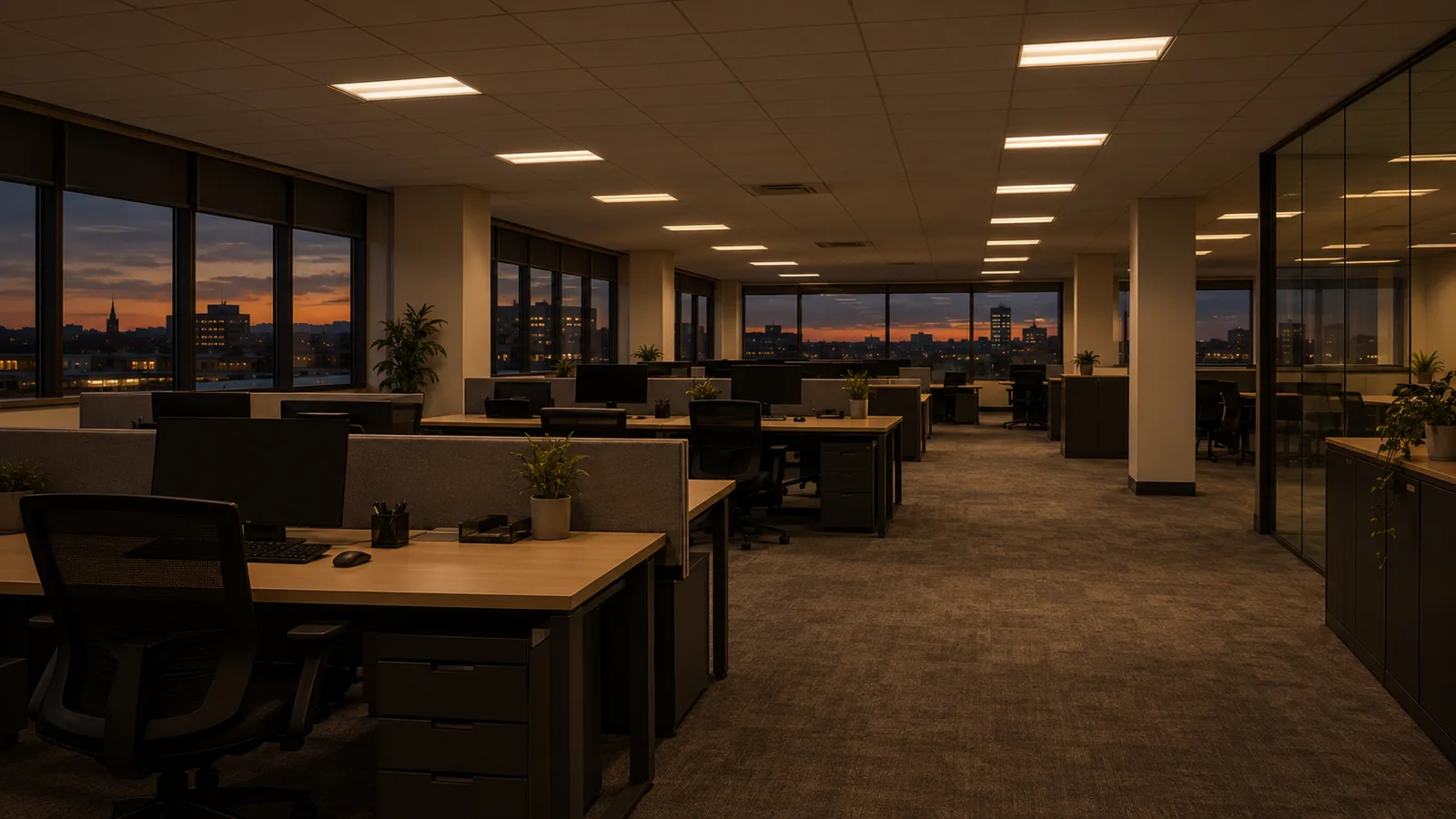
At Loxley House, Nottingham City Council's administrative office, Thorlux Lighting replaced T5 and compact fluorescent light sources with LED while keeping the existing aluminium luminaire bodies. Custom gear trays went into the original housings, wireless controls added daylight and presence sensing, and the emergency luminaires now self-test to BS EN 62034. Recolight reported that reusing the existing positions also cut installation time significantly (Recolight, 25 September 2026).
Projects like this are becoming more common as fluorescent lamps disappear from the market and building owners look at embodied carbon as well as energy. The question every survey has to answer is simple: is this housing worth keeping? This checklist sets out how we approach it at reLUMEN8.
Why keeping the housing matters
The housing is most of the luminaire by weight: the body, the reflector, the fixings and often the diffuser frame. Keeping it means less material to make and less waste to dispose of, no ceiling repairs, and usually a shorter installation. Our guides to circular economy lighting and embodied vs operational carbon explain the bigger picture.
The seven-point checklist
| Check | Keep the housing if | Replace if |
|---|---|---|
| Condition | Body is sound, straight and free of corrosion | Bodies are cracked, warped, corroded or brittle |
| Fixings | Fixings and suspension are secure | Fixings have failed or do not meet current requirements |
| Optics | Reflector or louvre can be cleaned or a new diffuser fitted | Optics are discoloured and no replacement is available |
| Space | There is room for an LED gear tray and driver | The body is too shallow or awkward for new gear |
| Layout | Positions still suit the room and its use | The space has been replanned and the light is in the wrong place |
| Controls | Sensors and drivers can be added | The client needs a format the housing cannot accept |
| Safety | The converted fitting can be tested and certified | Safety cannot be demonstrated after conversion |
Condition and fixings
Start on site. A survey records the luminaire type, quantity, condition and mounting for each area. Aluminium and steel bodies from good manufacturers often outlast several generations of lamps. Look for corrosion in damp areas, cracked plastics, yellowed diffusers and loose suspension. Fittings that are sound and safely fixed are the strongest candidates. Read why a lighting survey comes before a retrofit.
Light quality and layout
Keeping a housing only makes sense if the light it gives will suit the space after conversion. A retrofit gear tray can be designed for the right output and distribution, and a new diffuser can bring glare under control. If the floor plate has been replanned and the fittings are now over the wrong desks, replacement or relocation may be better. See upgrading diffusers during a retrofit.
Controls and emergency lighting
The Loxley House upgrade added wireless sensing and self-testing emergency lighting at the same time as the light source change. That is the ideal moment to do it, because the fittings are already open. Check that the converted fittings can accept sensors and the chosen control system, and that emergency conversions can be tested properly. Our guides to adding sensors during a retrofit and upgrading emergency lighting cover both.
Tubes, gear trays or new fittings
| Option | What changes | Best for |
|---|---|---|
| LED replacement tubes | Lamp only | Short-term fixes where the fitting is sound and the budget is tight |
| Gear tray or full retrofit | Light engine, driver, often diffuser | Sound housings where long life and controls are wanted |
| New luminaire | Everything | Failed housings, replanned spaces or a new design |
Our comparison of LED tubes vs full luminaire retrofit explains why a full retrofit is usually the better long-term choice.
Warranty and documentation
A converted fitting needs the same paperwork as a new one: test records, a warranty and clear labelling. Ask for this up front. See what warranty retrofitted fittings have.
Where we fit in
Recolight's Circular Lighting Live takes place on 8 October 2026 in the City of London, with talks on legislation, certification and circular practice, according to the same report. If you are weighing up a retrofit, the reLUMEN8 retrofit service from 299 Lighting can survey your building, convert sound housings and replace the rest with new linear or recessed fittings. For new-build office lighting, see linear lighting for open-plan offices, and for downlight replacements, recessed lighting in refurbishments.
Book a survey, or read what to send for a retrofit quote.
Further reading at 299 Lighting
Next steps on relumen8.com
Thinking about a retrofit?
Send us photos of your existing fittings, the location and rough quantities. A Light Engineer will tell you whether reLUMEN8 is viable.
Start a project →Frequently asked questions
Can old fluorescent fittings be converted to LED?
Often, yes. If the housing is sound and safely fixed, a new LED gear tray and driver can be fitted inside it, sometimes with a new diffuser and sensors.
When should a luminaire be replaced rather than retrofitted?
When the body is damaged or corroded, the fixings are unsafe, there is no room for new gear, or the space has been replanned so the fitting is in the wrong place.
Are LED tubes the same as a retrofit?
No. A tube replaces only the lamp. A full retrofit replaces the light engine and driver inside the housing, which usually gives better performance, controls and life.
Can sensors be added during a retrofit?
Yes. Daylight and presence sensors can often be added when the fittings are open, as in the Loxley House upgrade in Nottingham.