In short
What luminaire remanufacturing involves, the BS 8887-221 code of practice, warranties, and how it compares with replacing fittings, after Recolight Revive.
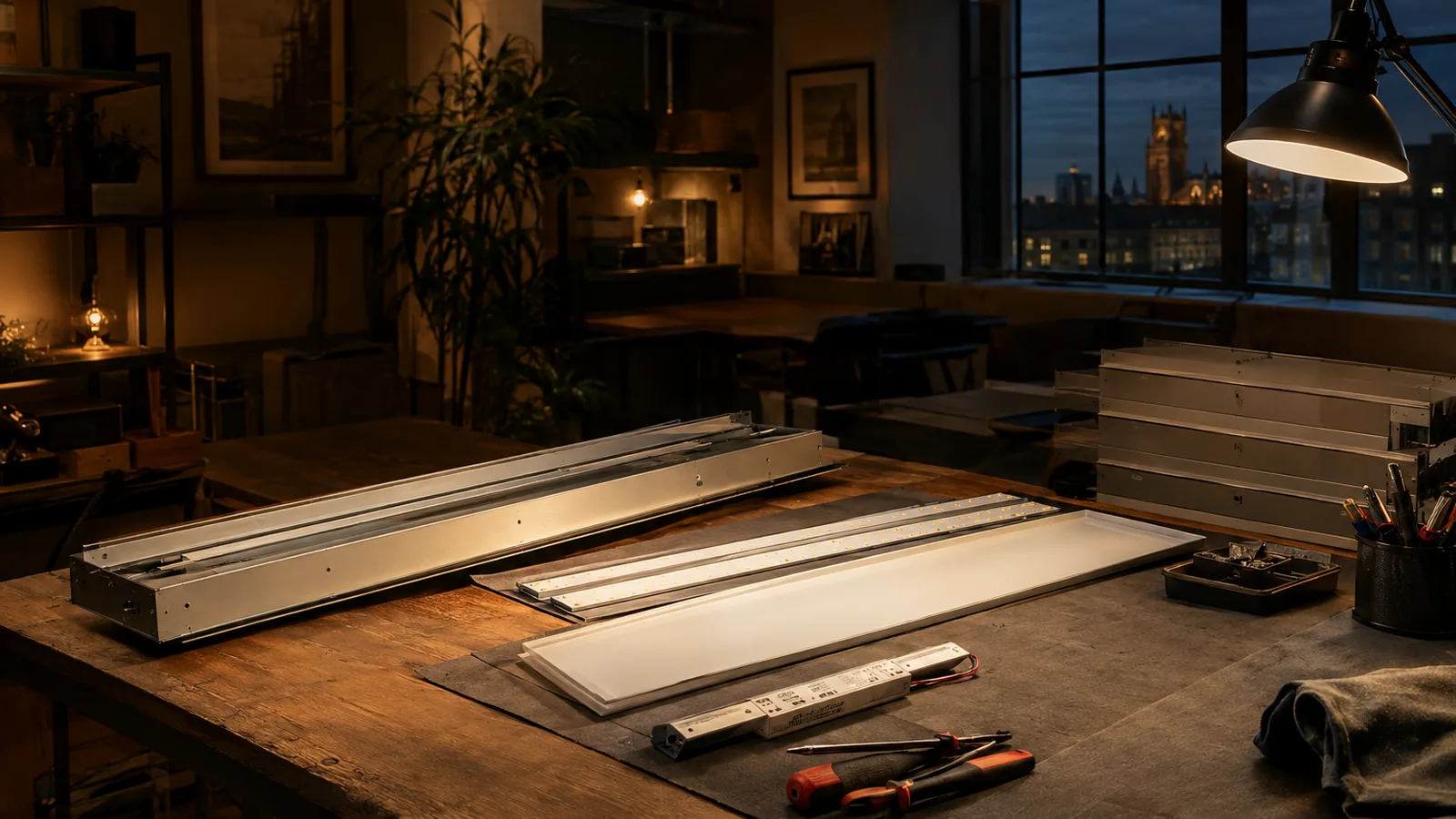
Recolight has launched Recolight Revive, a remanufacturing service designed to keep existing luminaires in use for longer by upgrading them with LED technology and controls (Voltimum). It was unveiled at Recolight's Circular Lighting Live event on 8 October 2026 at The Minster Building in the City of London. Recolight's report on the event says business models based on reuse, remanufacture and leasing are emerging as drivers of circularity in the lighting industry (Recolight).
That is good news for anyone who has been told that the only option for old fittings is the skip. This guide explains what remanufacturing means for building owners and how to judge whether it suits your building.
Remanufacture, retrofit and replace
| Option | What happens | Typical outcome |
|---|---|---|
| Lamp swap | Fluorescent tubes are swapped for LED tubes | Quick, but the old gear and housing stay |
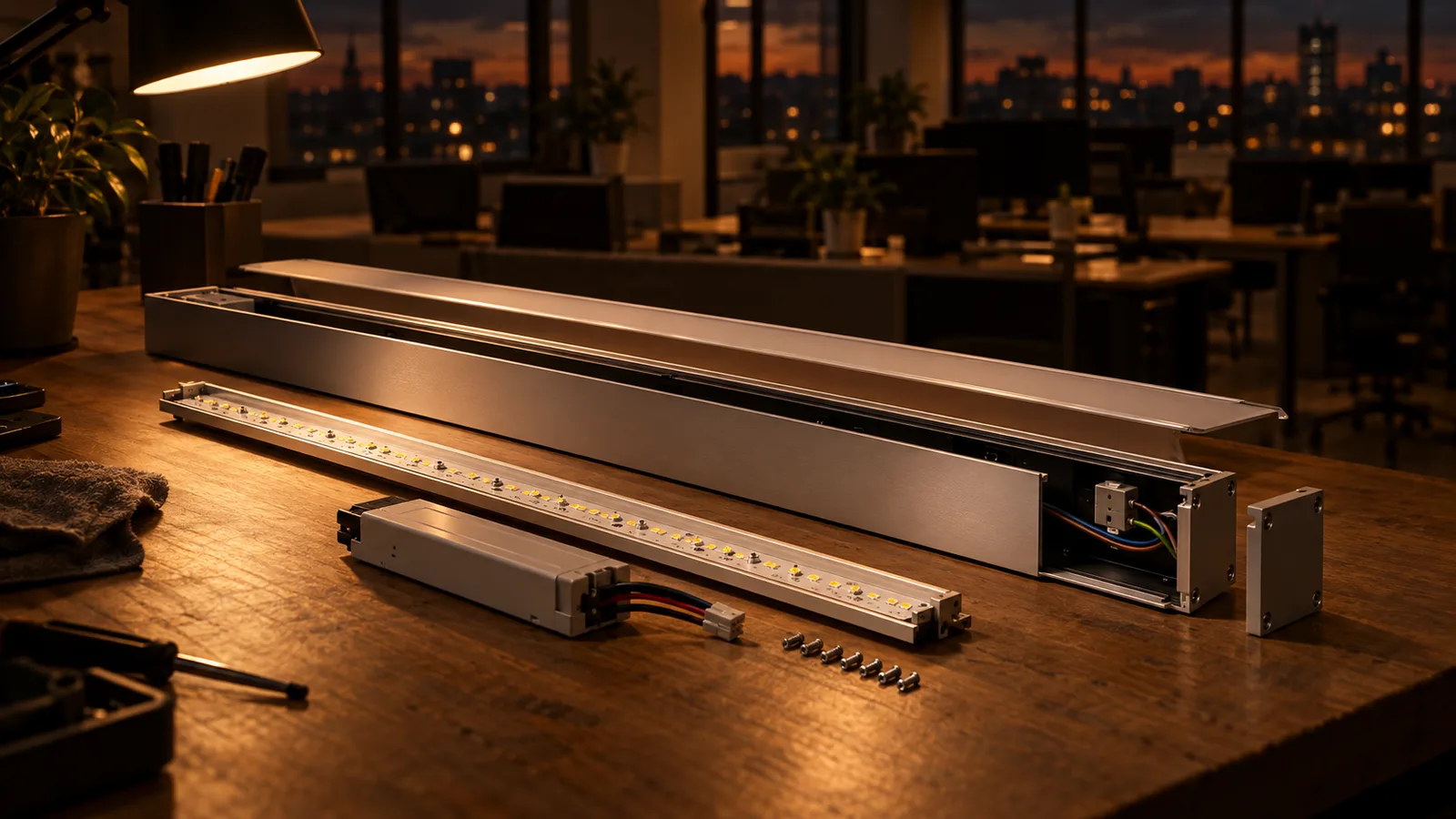
| Retrofit or remanufacture | The housing is kept and the light source, gear and often controls are replaced and tested | An upgraded luminaire, with documentation and a warranty |
| Replace | The old luminaire is removed and a new one installed | New product, with more waste and embodied carbon |
Our guides to retrofit vs replace and LED tubes vs a full retrofit go into the differences.
What the standard says
Voltimum reports that the Recolight Revive service follows BS 8887-221:2024, the code of practice for luminaire remanufacture. It includes assessment, testing, documentation and recertification. When you compare remanufacturing proposals, ask each provider:
- Which standard or code of practice do you follow?
- What testing is carried out on each luminaire?
- What documentation will we receive?
- What warranty covers the finished luminaire?
Why remanufacturing is growing
Recolight's report says remanufacturing has been established for decades and has grown in recent years because of high energy costs and the phase-out of fluorescent light sources. For background, read the fluorescent lamp phase-out and replacing fluorescent lighting with LED.
The report also notes a practical obstacle: taking fittings out of a ceiling does not automatically create a market for them. That is a strong reason to keep good luminaires where they are and upgrade them in place or on a planned programme.
Is your luminaire a good candidate?
Not every fitting is worth keeping. Good candidates usually have:
- Sound, undamaged housings
- Optics or diffusers that are in good condition or can be replaced
- A layout that still suits how the space is used
- Enough quantity of the same type to make the work efficient
Start with a lighting survey, then read is my luminaire housing worth keeping?. For specific fitting types, see modular panels, suspended linear fittings and bespoke and feature luminaires.
Carbon and circularity
Keeping the housing avoids much of the material in a new luminaire. CIBSE TM66 sets out how to assess circular economy performance in lighting. Our guides to TM66 and retrofit, embodied vs operational carbon and circular economy lighting explain how remanufacturing fits in. For new downlights, recessedlighting.co.uk covers specifying sustainable downlights.
How reLUMEN8 works
reLUMEN8 is 299 Lighting's retrofit service. It works in four steps: a call, assessment of a sample fitting with a site survey, refurbishment and testing off site, then delivery of fittings ready to install with a renewed 5-year warranty. Read how the reLUMEN8 process works and what warranty retrofitted fittings have.
Retrofit can also add controls. See adding sensors during a retrofit, and for the business case, LED retrofit payback.
Where new fittings are needed
Sometimes a space changes so much that new lighting is the right answer. In that case, see linear-led.com on surface linear lighting for refurbishment and suspendedlighting.com on suspended lighting in refurbishments. Old fittings should then be disposed of properly: see WEEE and lighting disposal.
Planning a remanufacturing programme
Remanufacturing works best as a planned programme rather than a one-off job. A typical approach:
- Survey the building and list luminaire types and quantities
- Test a sample of each type to confirm it can be upgraded
- Agree the specification, including light output, colour temperature, controls and emergency lighting
- Plan the phasing so floors or zones are done around occupants and lease events
- Keep records of test results, warranties and any changes for the building manager
In occupied buildings, phasing matters as much as the technical work. See retrofitting lighting in occupied buildings and upgrading emergency lighting in a retrofit.
Get started
Find out what to send for a retrofit quote, read about the 299 Lighting retrofit service, or contact the team.
Further reading at 299 Lighting
Next steps on relumen8.com
Thinking about a retrofit?
Send us photos of your existing fittings, the location and rough quantities. A Light Engineer will tell you whether reLUMEN8 is viable.
Start a project →Frequently asked questions
What is Recolight Revive?
A remanufacturing service launched by Recolight to keep existing luminaires in use longer by upgrading them with LED technology and controls.
What is BS 8887-221?
BS 8887-221:2024 is the code of practice for luminaire remanufacture. Voltimum reports that Recolight Revive follows it.
Is remanufacturing better than replacing luminaires?
Where housings are sound, keeping them avoids much of the waste and embodied carbon of new fittings. A survey will show whether your fittings are suitable.
What warranty does reLUMEN8 give?
Luminaires retrofitted through reLUMEN8 come with a renewed 5-year warranty.