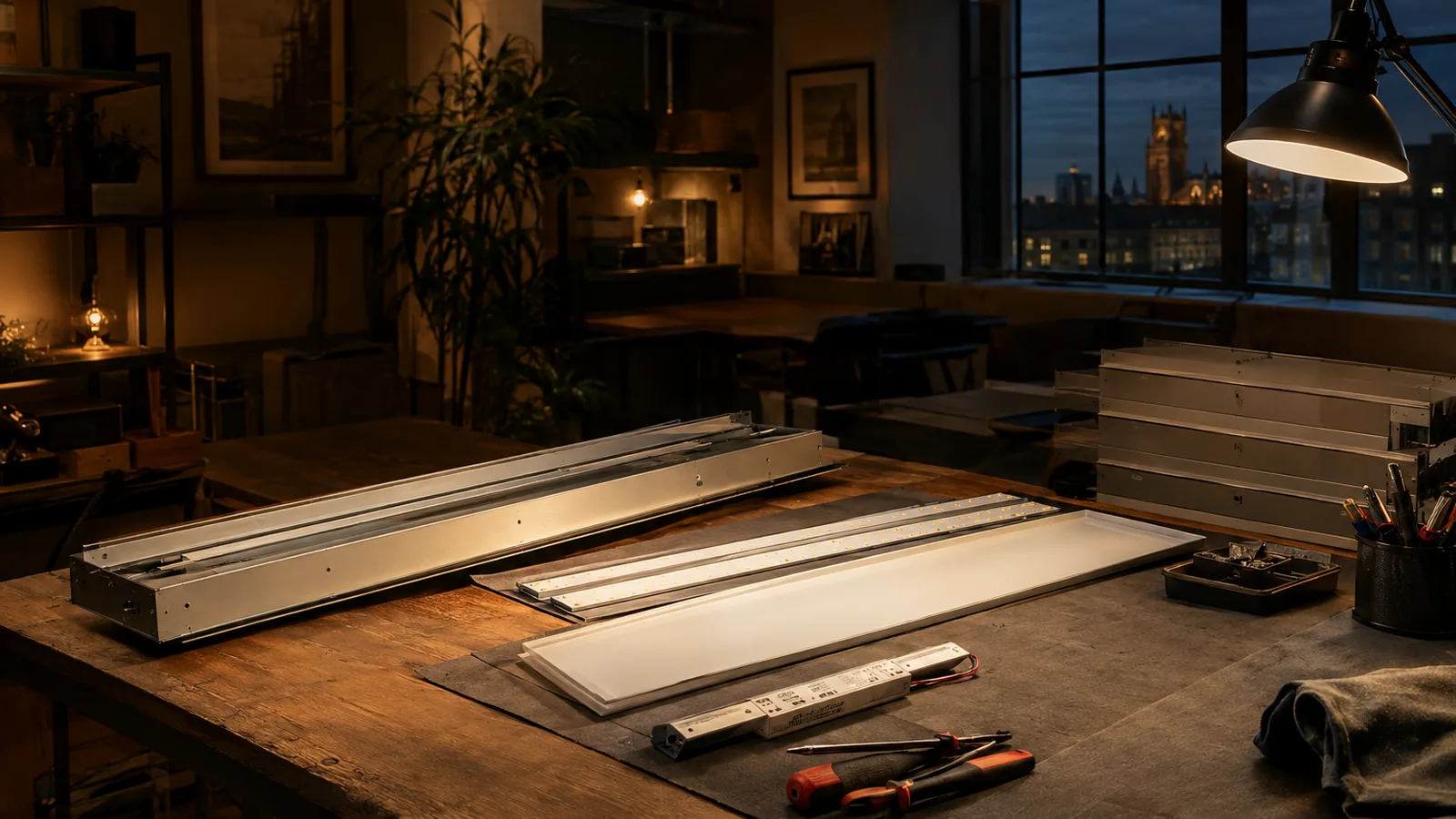
In short
TM66 scores how circular a luminaire is. Here is how a retrofit that keeps the housing and replaces the gear can be assessed and evidenced.
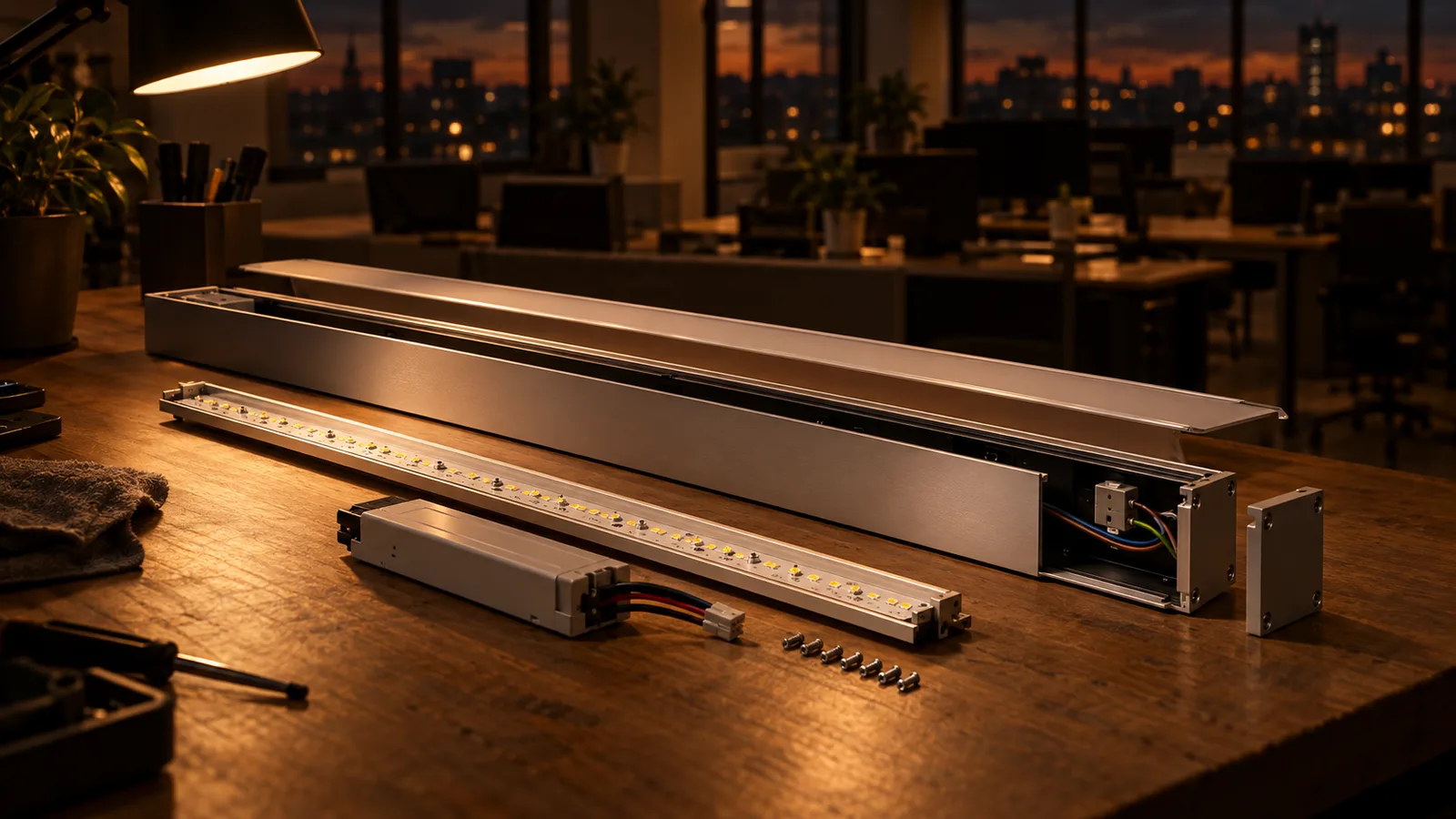
Recolight's Circular Lighting Live 2026 was held on 8 October at the Minster Building in the City of London, billed as a showcase of innovation, sustainability and circular design, with the theme "Vision 2040: Restructuring the lighting sector" (Recolight). One of the main industry frameworks for assessing circularity in lighting is TM66.
TM66, Technical Memorandum 66: Creating a Circular Economy in the Lighting Industry, was first introduced in 2021 and developed by CIBSE and the Society of Light and Lighting. It gives a structured, evidence-based way to score how circular a luminaire is across design, manufacture, maintenance, reuse and end of life (Fagerhult). This guide explains what that means for a lighting retrofit, where existing housings stay in the ceiling and only the light engine, driver and optics change.
Why TM66 matters for retrofit
Most circularity discussion focuses on new luminaires: can they be taken apart, repaired and recovered? A retrofit starts from the other end. The luminaire already exists. The question is how much of it can stay in use, and how well the new parts will support another life after this one.
That fits TM66's thinking closely. Keeping a steel or aluminium body in service avoids making, shipping and installing a new one, and avoids stripping out and disposing of the old one. It is the same logic we set out in circular economy lighting and embodied vs operational carbon.
What a circularity assessment looks at
TM66 asks for evidence rather than claims. For a retrofit, the useful questions are practical:
| Area | What to ask about a retrofit |
|---|---|
| Materials | How much of the original luminaire is kept? What are the new parts made of? |
| Design for disassembly | Are the new gear tray, driver and LED boards fixed with screws and plugs rather than glue or rivets? |
| Replaceability | Can the driver and LED module be replaced on their own in future? |
| Maintenance | Is there documentation, spares information and a clear warranty? |
| End of life | Can the removed gear and the new parts be separated and recycled under WEEE? |
| Ecosystem | Is there a route for future refurbishment, and who will carry it out? |
TM66's scoring system considers materials, manufacturing and wider ecosystem factors together (Fagerhult). In practice, a retrofit that keeps the body but fits sealed, non-replaceable parts is less circular than one designed to be opened and serviced again, because the next repair becomes a replacement.
How to make a retrofit more circular
Keep as much of the luminaire as you can
Start with a survey. Housings that are sound, safely fixed and in the right place are the core of a circular project. Our guide on whether a housing is worth keeping sets out the checks.
Specify serviceable new parts
- Plug-in connections between driver and LED board
- Mechanically fixed gear trays, not bonded
- Standard driver form factors so like-for-like replacements are available
- Labels inside the housing showing the retrofit date, driver type and supplier
Record what you did
Circular claims need records. Keep a schedule of every luminaire retrofitted, the components fitted, the date, and photographs. That record supports ESG reporting and makes the next refurbishment faster.
Recover what comes out
Old control gear and lamps should leave site through a compliant WEEE route. See disposing of old lighting responsibly.
What to ask a retrofit supplier
If circularity is part of the brief, ask for answers in writing before you appoint anyone:
- Which parts of the existing luminaire will be kept, and which removed?
- How are the new gear tray, driver and LED boards fixed?
- Can each component be replaced on its own, and are spares available?
- What warranty covers the retrofitted luminaire? See retrofit warranties
- How will removed parts be recycled, and will you receive WEEE paperwork?
- What records will you hand over at completion?
Clear answers make it easier to evidence the project to clients, funders or sustainability assessors, and to plan the next refurbishment cycle.
Retrofit, replace or remanufacture?
| Option | What stays | Circularity |
|---|---|---|
| Like-for-like replacement | Nothing | Lowest. New luminaire made, old one recycled at best |
| LED tube swap | Housing, old gear in many cases | Limited. Old gear often stays, controls and life are limited |
| Full retrofit | Housing, often diffuser | High, when new parts are serviceable |
| Remanufacture off site | Housing, refinished | High, but more transport and disruption |
For many offices, schools and public buildings, a full on-site retrofit is the practical middle ground. Our LED tubes vs full retrofit guide explains the difference.
Where new fittings still make sense
Circularity is not a reason to keep fittings that no longer suit the space. If a floor has been replanned, or a ceiling is being replaced anyway, new luminaires designed for disassembly may be the better answer. For those projects, see 299 Lighting's linear range, linear lighting for open-plan offices and recessed lighting in refurbishments.
Next steps
Send us a list of the fittings you have and photographs of a typical housing. Contact 299 Lighting, or read how the reLUMEN8 process works and what to send for a retrofit quote.
Further reading at 299 Lighting
Next steps on relumen8.com
Thinking about a retrofit?
Send us photos of your existing fittings, the location and rough quantities. A Light Engineer will tell you whether reLUMEN8 is viable.
Start a project →Frequently asked questions
What is TM66?
TM66 is a CIBSE and Society of Light and Lighting technical memorandum, first introduced in 2021, that sets out how to assess and score circularity in lighting products.
Does a lighting retrofit count as circular?
It can. Keeping the existing housing in use avoids a new luminaire, and fitting serviceable new parts supports future repair and reuse.
What makes a retrofit score better for circularity?
Keeping more of the original luminaire, using screwed and plug-in parts that can be replaced individually, keeping good records, and recovering removed parts through WEEE.
Is remanufacturing better than retrofitting on site?
Both keep the housing in use. On-site retrofit usually means less transport and less disruption, while off-site remanufacture allows full refinishing.