In short
New Oxford University research finds most buildings in its sample saved money by repairing and reusing LED systems instead of replacing them.
Facilities Dive reported on 29 October 2026 on a report, From energy efficiency to resource efficiency, by Oxford University and Academics for Circular Economy, supported by Signify. It found that three-quarters of UK and European organisations in its sample "either lowered their capital or maintenance costs, extended the life of their systems or avoided downtime by repairing, refurbishing or taking other steps to reuse their older LED systems rather than replace them" (Facilities Dive).
The finding is a useful reminder: moving to LED was the first step. The next question for many buildings is what to do with LED fittings, and older fluorescent fittings, as they age. Throwing them away is not the only answer.
What the research found
Facilities Dive reports these results from 50 buildings that used circular principles:
| Outcome | Buildings out of 50 |
|---|---|
| Lowered maintenance costs | 37 |
| Extended the life of the system | 31 |
| Avoided downtime | 23 |
| Avoided full replacement of an obsolete system | 20 |
The report also says "the main financial contribution of circularity comes from costs avoided", and warns that "rapid technological change can lead organizations to replace whole installations, discarding functioning components, valuable materials and remaining asset value".
Repair, refurbish, retrofit or replace
| Option | What happens | When it fits |
|---|---|---|
| Repair | Faulty parts, such as drivers, are replaced | Mostly working LED installations |
| Refurbish | Fittings are cleaned and parts renewed | Sound fittings that look tired |
| Retrofit | New LED engine and driver in the existing housing | Fluorescent or early LED fittings with good housings |
| Replace | New luminaires | Damaged housings, or a new layout is needed |
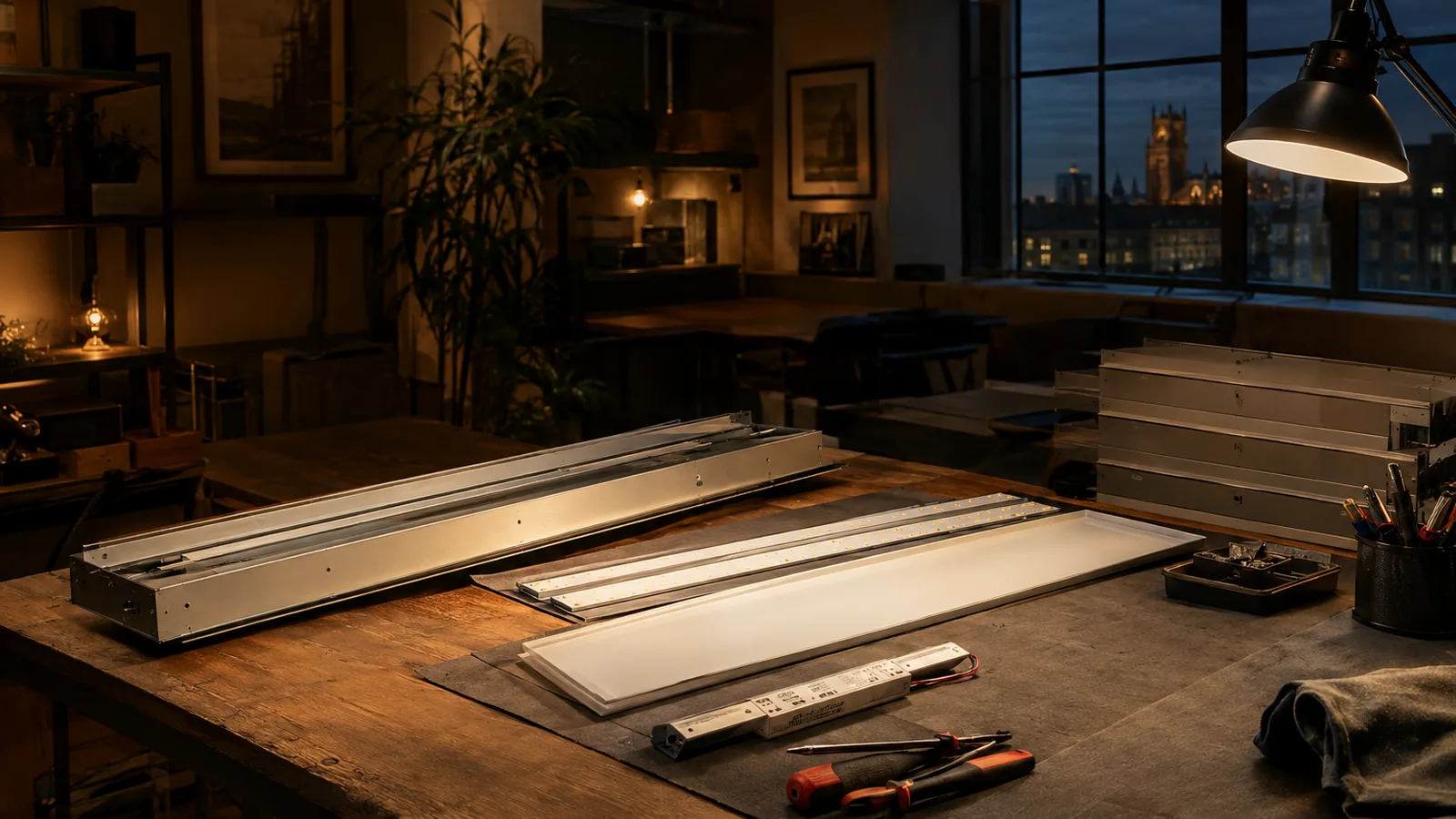
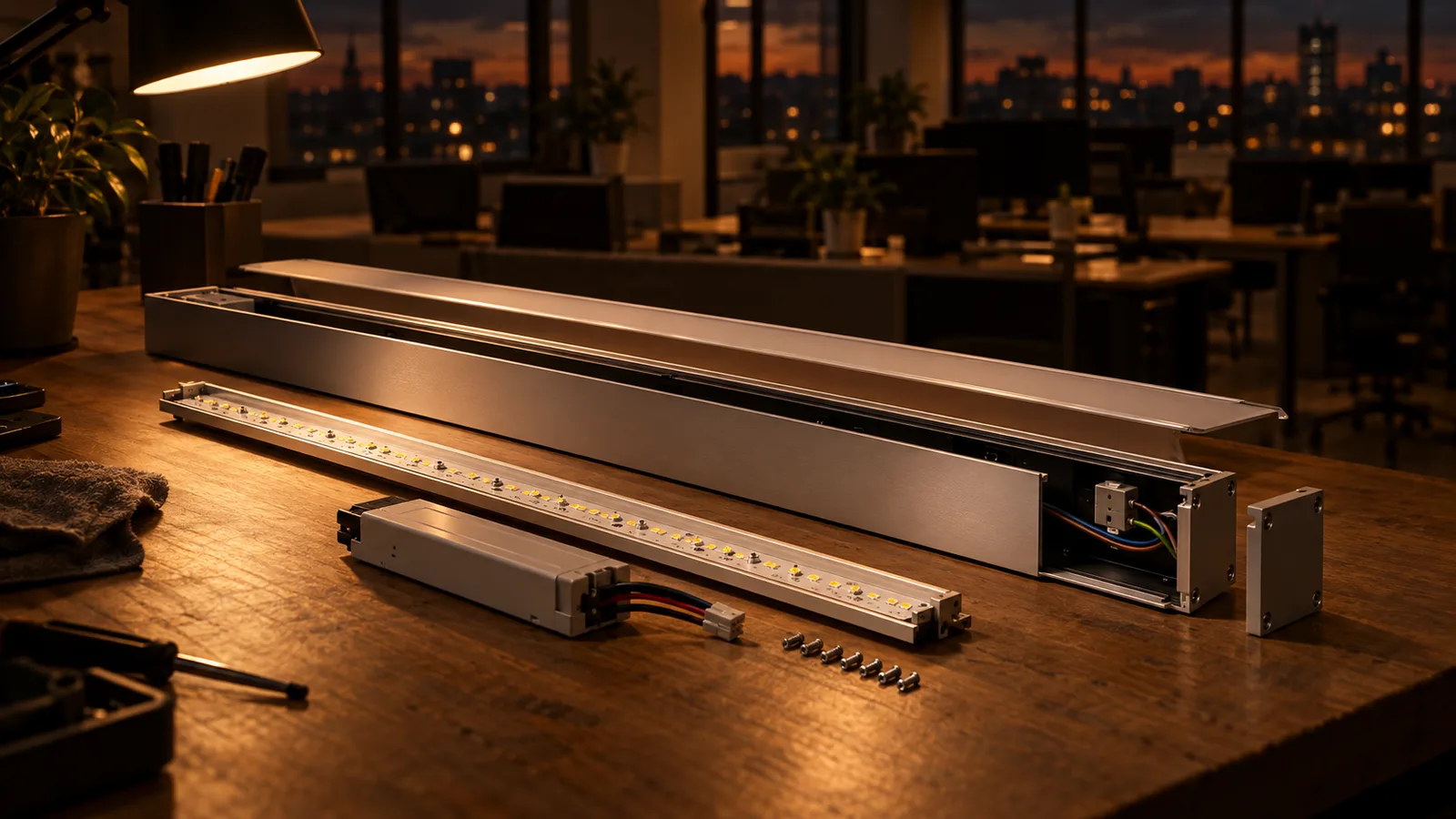
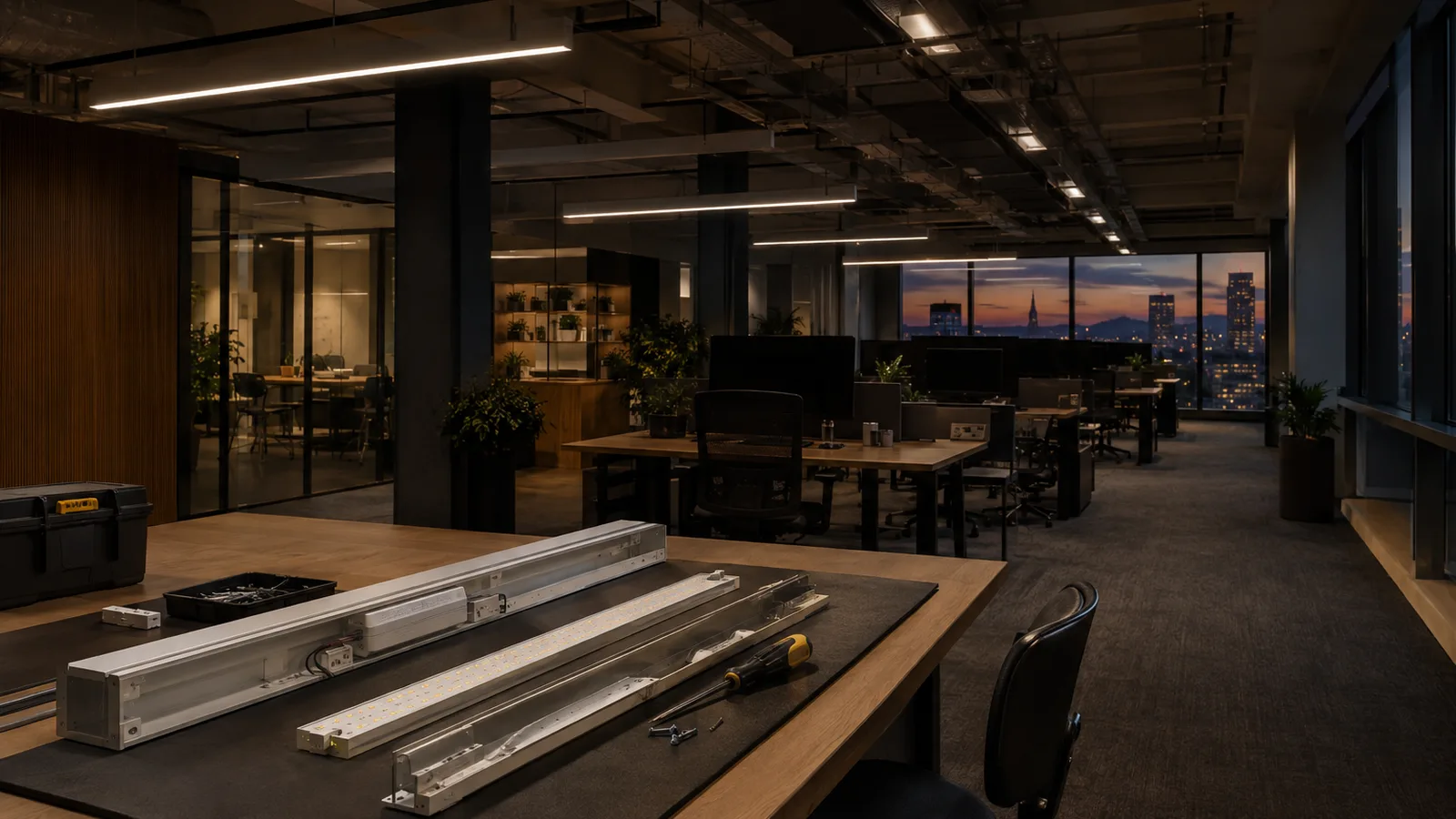
reLUMEN8 sits in the retrofit column. We keep the housing and fit new LED gear, so the fittings stay in the ceiling. Read how reLUMEN8 works and retrofit vs replace.
Why keeping fittings saves money
The report's point about avoided costs matches what we see on projects:
- Less disruption. Ceilings stay in place, which matters in occupied buildings
- No new layouts. Existing positions and wiring are often reused
- Less waste. Housings stay in use instead of going for recycling. See WEEE and lighting disposal
- Lower embodied carbon. Read embodied vs operational carbon
- A renewed warranty. Luminaires retrofitted through reLUMEN8 come with a renewed 5-year warranty: see retrofit warranty
What about payback?
The report notes that "not all users' value can be expressed directly through payback". Energy savings still matter, but so do avoided capital costs, reduced downtime and sustainability reporting. Our guides to LED retrofit payback and ESG reporting cover both sides.
How to decide for your building
- Start with a survey. See the lighting survey
- Check the housings. Read is my luminaire housing worth keeping?
- Think about controls. A retrofit is a good time to add sensors: see adding sensors
- Do not forget emergency lighting. See emergency lighting retrofit
- Send the right information. See what to send for a quote
Circularity frameworks
If you report against circularity targets, CIBSE TM66 gives a method for assessing lighting products. Read TM66 and circular retrofit and our explainer on remanufactured luminaires.
Applying the findings to fluorescent fittings
The report focuses on older LED systems, but the same logic applies to the many buildings that still have fluorescent fittings. Fluorescent tubes are being phased out in Great Britain, so building owners have to decide what to do with them. Read the fluorescent lamp phase-out and replacing fluorescent tubes with LED.
There are three common routes:
- LED tubes in the existing fittings. Quick, but the old gear and diffusers often stay. See LED tubes vs full retrofit
- Full retrofit, with a new LED engine, driver and often a new diffuser in the existing housing. See new diffusers
- Replacement with new luminaires, where housings are damaged or the layout must change
For modular ceilings, read retrofit for modular panels, and for suspended fittings, retrofit for linear pendants.
Who benefits most
Buildings with a large number of similar fittings in good condition tend to gain the most from reuse. That includes offices, schools, public buildings and co-working spaces. See office lighting upgrades for landlords, lighting retrofit for schools and public sector retrofit.
Questions to ask before you replace
Before signing off a full replacement, it is worth asking a few simple questions. Are the housings sound, with no corrosion or damage? Do the existing positions still suit the layout? Is the ceiling staying? Are the diffusers clean and undamaged, or can they be replaced on their own? If the answer to most of these is yes, keeping the fittings is likely to cost less, cause less disruption and create less waste. If the layout has to change completely, or the housings are damaged, new luminaires may be the better route. The cost savings guide shows how to compare the two options, and our page on the circular economy in lighting explains the wider picture.
How 299 Lighting can help
reLUMEN8 is delivered by 299 Lighting. Find out more about the 299 Lighting retrofit service, our services and project support, or contact the team to arrange a survey. If replacement is the right answer, see linear-led.com on surface linear for refurbishment and recessedlighting.co.uk on recessed lighting refurbishment.
Further reading at 299 Lighting
Next steps on relumen8.com
Thinking about a retrofit?
Send us photos of your existing fittings, the location and rough quantities. A Light Engineer will tell you whether reLUMEN8 is viable.
Start a project →Frequently asked questions
What did the Oxford University LED research find?
Facilities Dive reports that three-quarters of UK and European organisations in the sample lowered costs, extended system life or avoided downtime by reusing older LED systems rather than replacing them.
Who produced the report?
Oxford University and Academics for Circular Economy, with support from Signify, according to Facilities Dive.
Is retrofit cheaper than replacing luminaires?
Often, because housings, positions and wiring are kept. A survey shows whether your fittings are suitable.
What warranty does reLUMEN8 give?
Luminaires retrofitted through reLUMEN8 come with a renewed 5-year warranty.